Historical: Harvey Two Years Later

Historical: Harvey Two Years Later

By this time, many of you have probably heard many comparisons about Imelda and Harvey, as many people are deciding now is a relevant time to revisit those wounds. We know you’ve heard, talked about, and read a lot already about Harvey’s destruction and aftermath, but we thought now would be an appropriate time to lean in and retell a few impactful pieces of truly historical information, especially following the recent storms and tornadoes out of North Texas in recent days.

“Hurricane Harvey was the most significant rainfall event in U.S. history, both in scope and peak rainfall amounts.”

Source: 2018 US Geological Survey
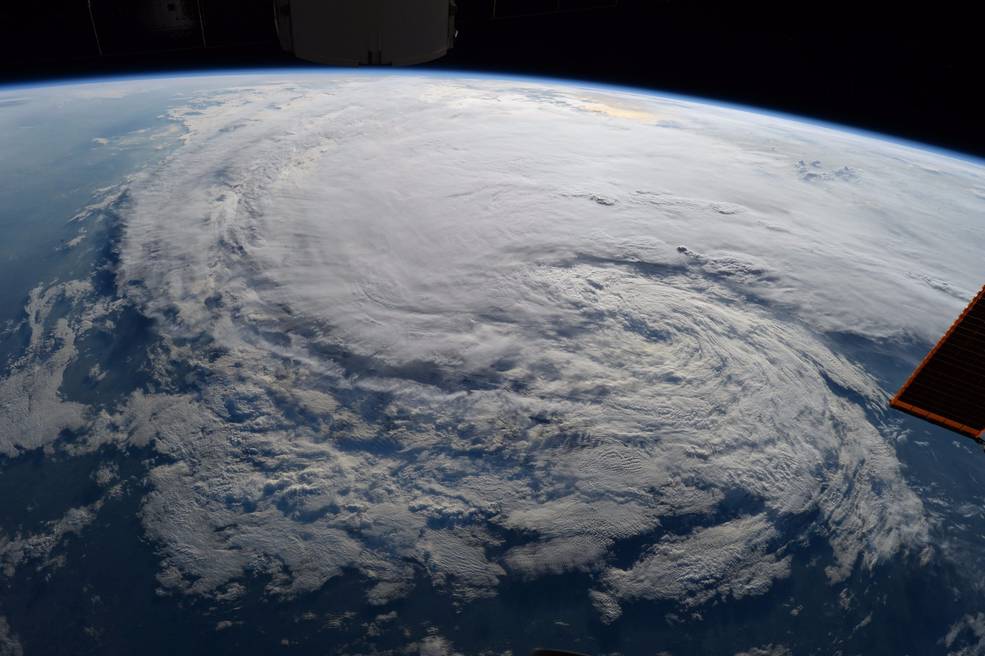
Harvey viewed from the International Space Station on Aug. 28, 2017 at 1:27 p.m. CDT as a Tropical Storm. (Photo by Astronaut Randy Bresnik. Credits: NASA 2017)

“Not only were rainfall totals exceptional during Hurricane Harvey, the area affected was also larger than previous events.”

Source: 2018 US Geological Survey
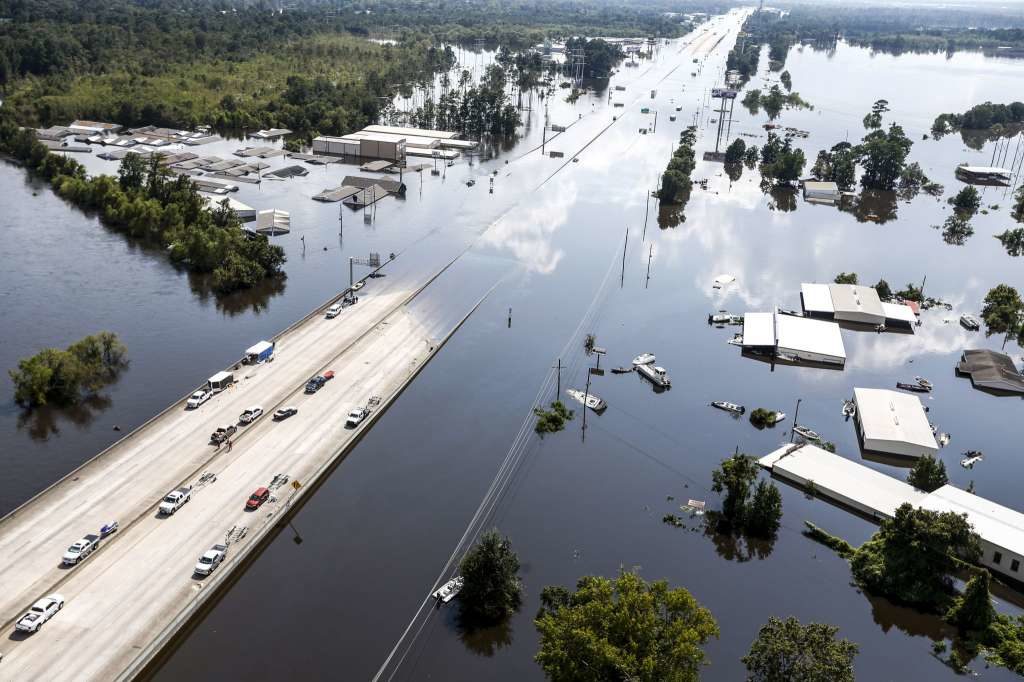
Interstate 10 submerged by floodwaters of Harvey on Sept. 1, 2017, Vidor, Texas.
(Photo by Brett Coomer. Credits: Houston Chronicle 2017)

Some sources have claimed that Hurricane Harvey actually destroyed more vehicles than any single event in American history. The Insurance Council of Texas reports an industry-wide figure of at least 250,000 cars and just short of $4 billion paid out. If you throw in the uninsured fleet, which is sadly an enormous number, this has to be the single largest incident of vehicular destruction in America.

Fast Forward to 2019

And then we had Imelda enter the scene. The risk it posed was already being downplayed as just an area of disturbed weather up until literally the last moments. When most people thought the risk the weather posed was over, and over the span of a mere 15-45 minutes, things changed drastically for the worst — and what resulted, we all saw. Right outside the coast, it changed to tropical depression and again to tropical storm before meandering over Southeast Texas and drenching our communities. Many of the same areas bombarded by Harvey were again traumatized by Imelda.
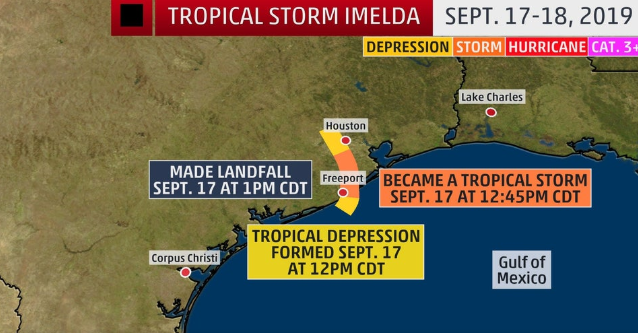
Imelda’s history as shown by The Weather Channel company. (Source: TWC 2019)

In retrospect, what’s the damage?

  • Ten weather events have already inflicted at least $1 billion in damage each in 2019, NOAA said.
  • This is the fifth year in a row with at least 10 such costly weather disasters in the US.
  • Since 1980, 254 such weather disasters have inflicted $1.7 trillion in damage.

To read more, visit the article here.

The facts, the data, the statistics, the details – for Harvey, they’re in and finished. But for Imelda and the other weather disasters still to come, there is still a lot of research to be done before we get all the information.

Of course it’s not all doom and gloom, as we’ve seen from the outpouring of community support and the numerous photos floating around social media proving the resilience and commitment to empathy for others in these and similar situations.

From the ‘Cajun Navy‘ or similar individuals rescuing stranded folks from their rooftops to local businesses opening their doors to provide shelter to those in need. From Texans showing up en masse to help save pets in flooded animal shelters to rescuing over 50 horses that weren’t evacuated in time.

https://www.instagram.com/p/B2n3V5lh2Li/?utm_source=ig_web_copy_link

We are Resilient. And we are #TexasStrong.
Dumpster Brokers: The Truth You Should Know

Dumpster Brokers: The Truth You Should Know

This piece is especially timely right now, because there are always outsiders looking to “make a buck” off of local tragedy. When natural disaster strikes, as it has in Southeast Texas recently with Imelda, predatory businesses sometimes try to use the circumstances to their advantage, mostly at the expense of true locals.

“What is a dumpster broker anyway?”

In short, they are middlemen. Brokers often act as if they are a local dumpster service, when in fact they don’t own any dumpsters and are definitely not locally based or owned. If you are the average person looking for quotes or pricing info for local dumpsters, rolloffs, storage containers, etc. and you have ever done a simple search through Google, Bing, or another search engine, then you have likely seen a broker advertising as if they were local.

Don’t be fooled by the fakes, choose local.

Dumpster brokers are sometimes hard to spot because they typically don’t announce the fact that they are a broker. They actively seek unused local addresses and phone numbers to advertise on their websites. But when you call them and ask for a return phone number, they will often give you a direct line that is out of State or toll-free. These guys answering the phone often want to make a commission, can be pushy about securing terms soon, and will insist on theirs being “the best deal locally”. The broker businesses they represent want to charge you more for using the same products and services you could find locally with a phone book directory or simple word of mouth referral.

You can avoid these companies (and extra fees!) by calling known dumpster providers in your area!

One quick way to check if the company is truly local is to edit your search terms for another city. For example, if you searched for “local rolloff Beaumont Texas” and have come across a company that might be a broker, change your search. Have it read “local rolloff San Antonio Texas”, or Houston, Austin, etc. instead. If the very same company comes up as local and has a different phone number for each area code, that is a red flag that this is not a locally-owned company. It’s a broker.

Besides the increased cost of using brokers, communication pitfalls are another inevitable result if you aren’t choosing truly local companies.

“Information on getting what you want, where you want it, when you want it now travels through a third party. Details and advice on sizes, placement, payment, loading and more all get short-changed. Broker’s information is usually somewhat vague because they advertise the same services and roll-off containers to every city in the country with one website.”

From Sam Stankie of Sam’s Hauling Inc. in Denver, CO.
Source.

If you need to make last minute adjustments and update your delivery driver directly, going through a third-party can cause delays and confusion. If you are not sure about the size of rolloff you need for your specific projects, a local company’s best interest is to customize your work order to your needs. However, a broker’s main concern is making money as the middleman and may not give the best advice on which size container to use.

|REMEMBER| A reputable, local dumpster/rolloff rental company will be licensed, insured, and upfront about its pricing structure. Avoid broker websites that have vague, outdated information, or very generalized details but no pricing information anywhere.

Do you think you’ve been duped by a broker before?

Do you have any experiences with brokers like this? We would love to know your thoughts about them and any tips on how to look out for their tricks.