Highlighting Waste & Recycling Pressures During a Modern Pandemic
An Excerpt Collection
A discarded medical glove in Jersey City, N.J., April 27, 2020. Arturo
Holmes/Getty Images
. . .
|”Many of the new staples of pandemic life (such as single-use plastic containers, online shopping packaging and disposable gloves, wipes and face masks) are made from plastics that are simply not worth recycling if there are any other disposal options.”|
“Many items designated as reusable, communal or secondhand have been temporarily barred to minimize person-to-person exposure. This is producing higher volumes of waste.”
|”Sanitation workers have noted massive increases in municipal garbage and recyclables. In cities like Chicago, workers have seen up to 50% more waste. According to the Solid Waste Association of North America, U.S. cities saw a 20% average increase in municipal solid waste and recycling collection from March into April 2020.”|
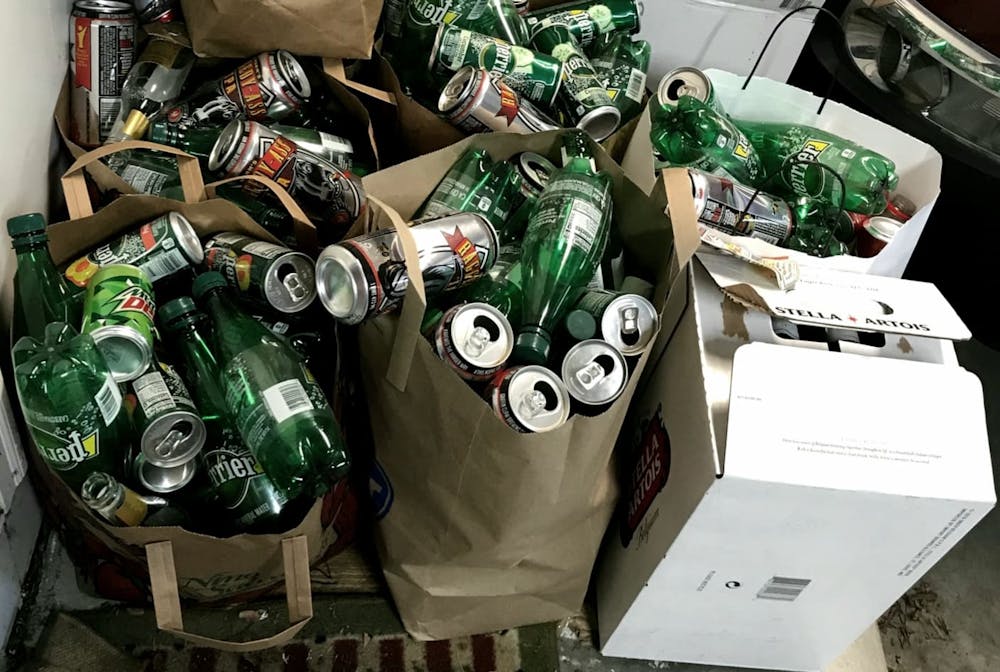
While bottle deposit stations remain closed, recyclables pile up in
basements and garages. David Rieland, CC BY-ND
“The global recycling economy has suffered since 2018 as first China and then other Asian nations started banning imports of low-quality scrap – often meaning improperly cleaned food packaging and poorly sorted recyclable materials. “
|”Given worker safety concerns, low market prices for scrap materials, a slowed economy and cheaper alternatives for disposal, many communities and businesses across the U.S. have temporarily suspended collection of recyclables and bottle deposits.“|
“Based on monitoring since 2017 by the trade publication Waste Dive, nearly 90 curbside recycling programs had experienced or continue to experience a prolonged suspension over the past several years. About 30 of these suspensions have occurred since January 2020.“
|”Although higher volumes of recyclables are being set on the curb, budget deficits are squeezing recycling programs. Many municipalities are struggling with multimillion-dollar shortfalls. Some communities have cut recycling programs altogether. And these stresses are testing an industry already facing uncertainty.”|
The original article is from The Conversation, republished in excerpts here
under a Creative Commons license. You may wish to read the original "COVID-
19 is Laying Waste to Many U.S. Recycling Programs".
Authors of the original article: Brian J. Love, Professor of Materials
Science and Engineering, University of Michigan and Julie Rieland, PhD
Candidate in Macromolecular Science and Engineering, University of Michigan
. . .
If you’d like to read more about how the system of recycling worldwide has been struggling since 2018, we wrote an informative piece about it in our blog here. The next installment in the Recycling series will discuss the implications of Asia’s regulation restrictions, issues with materials contamination, and costs associated with keeping such programs alive. More to come soon.